Understanding how people grow, stay motivated, and make decisions becomes much easier when you can see it clearly. This guide walks you through Maslow’s Hierarchy of Needs in a simple way—breaking down each core level and helping you turn it into a clean, visual diagram. You’ll learn the basics, follow a step-by-step process to map the hierarchy, and pick up practical tips to make your diagram clear, useful, and easy for anyone to understand. By the end, you’ll be able to apply this framework to your own field or scenario and create a diagram that fits your specific goals or context.
What Is Maslow’s Hierarchy of Needs?
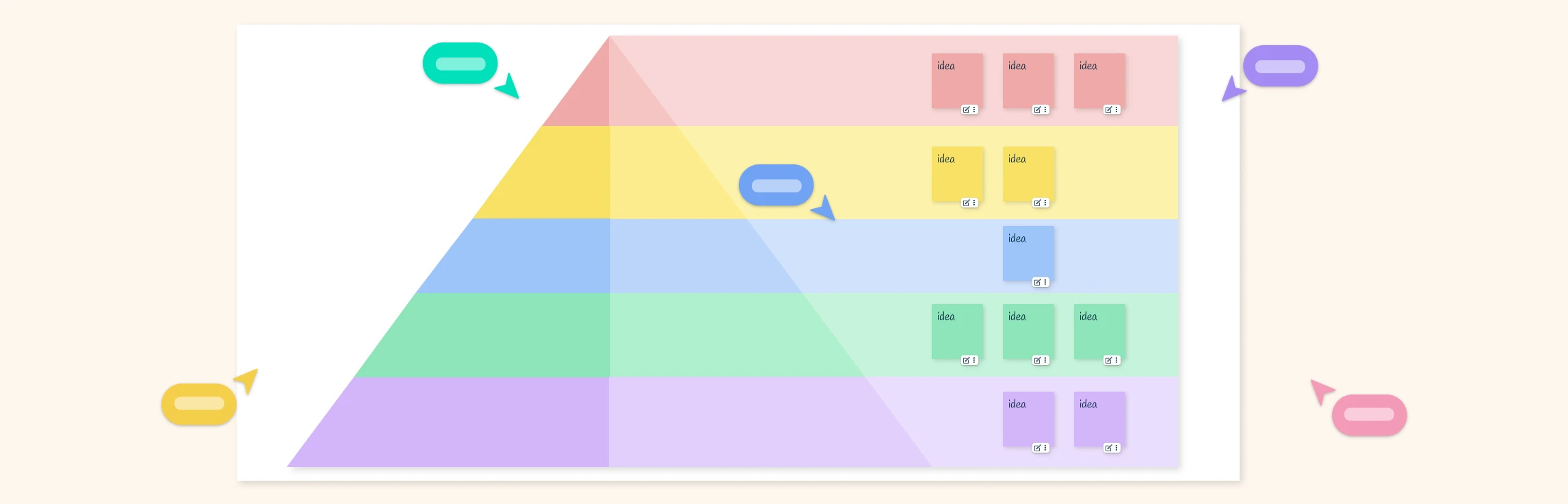
Maslow’s Hierarchy of Needs is a simple framework that explains how human motivation progresses from basic survival to personal growth. Sometimes called Maslow’s hierarchy of motives, Maslow triangle of needs, or Maslow’s pyramid of needs, the idea stays the same: people focus on essential needs like food, safety, and stability first, and once those feel secure, they naturally shift toward belonging, confidence, and finally, self-actualization. The model is often shown as a pyramid because each level builds on the one below it, helping you easily see how our needs shape decisions, behavior, and long-term development.
Key Components of Maslow’s Hierarchy of Needs Chart
Maslow’s hierarchy is built on five layers of human needs, each one shaping how we think, feel, and act.
1. Physiological Needs — The Essentials
These are the foundational needs that keep us alive: food, water, sleep, and basic comfort. When these aren’t met, they become the only priority.
2. Safety Needs — Feeling Protected
Once the basics feel secure, we look for stability—physical safety, financial security, health, predictable routines, and a sense of control.
3. Love & Belonging — The Need for Connection
Humans thrive on relationships. Friendships, family, teams, community, and emotional support help us feel included and valued.
4. Esteem Needs — Confidence & Recognition
This level is about feeling capable and respected. Achievement, skill mastery, recognition, and self-confidence all sit here.
5. Self-Actualization — Becoming Your Best Self
At the top is growth—creativity, purpose, personal development, and realizing your full potential. This is where people feel most fulfilled and motivated.
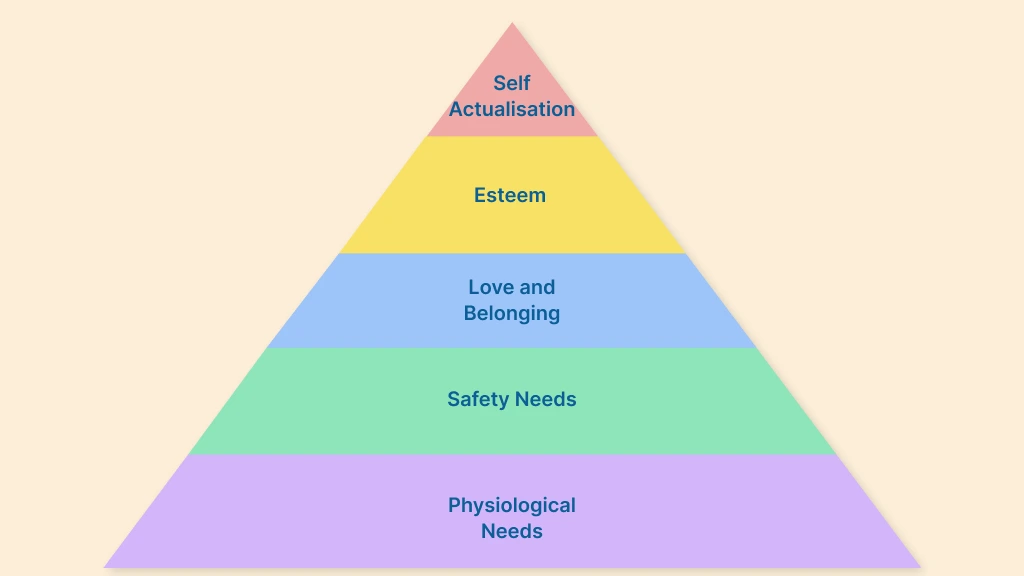
Understanding these levels makes it easier to map the model visually and apply it to real-life situations such as designing a product, creating a learning experience, managing a team, or supporting personal growth.
How to Create Maslow’s Hierarchy of Needs Diagram
Creating a diagram of Maslow’s hierarchy of needs is simpler than it looks. You’re basically turning the five levels into a clean visual that anyone can understand at a glance. Follow these steps to build a clear, meaningful diagram you can use in teaching, coaching, design, or any real-life scenario.
Step 1: Define the Purpose of Your Diagram
Decide why you’re creating it: teaching students, mapping workplace needs, analyzing user behavior, or guiding personal development. This keeps the layout focused and relevant.
Step 2: Choose Your Layout
Pick a structure that fits your context. Most people use a pyramid, but block diagrams or horizontal layers work just as well if you need more space for details. You can use Creately’s ready-made Maslow’s hierarchy of needs template to get started instantly.
Step 3: Add the Five Levels in Order
Start from the bottom and work your way up: Physiological → Safety → Love & Belonging → Esteem → Self-Actualization. Make the base wider to show it’s the foundation.
Step 4: Label Each Level Clearly
Add simple headings and keep the wording short. Use terms your audience will instantly understand.
Step 5: Add Short Descriptions or Examples
Include a few quick examples such as food, security, relationships, confidence, creativity so the hierarchy feels real and relatable, not abstract.
Step 6: Use Colors or Visual Cues
Add colors, icons, or shading to show progression. Warmer colors near the top help highlight growth and potential.
Step 7: Review and Adjust the Layout
Make sure the diagram feels balanced, readable, and relevant to your specific use case. A clean layout makes the hierarchy far easier to interpret.
Tips for Making an Effective Hierarchy Diagram
A great diagram of Maslow’s Hierarchy of Needs isn’t just accurate, it’s easy to read, visually clear, and meaningful to the audience you’re designing it for. Here are a few simple tips to make your diagram stand out:
Keep the Structure Simple: Avoid unnecessary shapes or clutter. The hierarchy works best when each level is clean, evenly spaced, and easy to scan.
Use Color to Show Progression: Subtle color changes help guide the eye from basic needs to higher-level growth. Choose a palette that feels calm, encouraging, and readable.
Make Labels Short and Clear: Use everyday language instead of technical terms. Your audience should “get it” at a glance without reading long descriptions.
Add Examples for Context: A word or two like “food,” “safety,” “friends,” “confidence,” or “purpose” helps turn abstract levels into something relatable and real.
Prioritize Readability Over Decoration: Stylish visuals are great, but not if they distract. Stick to consistent spacing, clear typography, and a layout that supports understanding, not aesthetics.
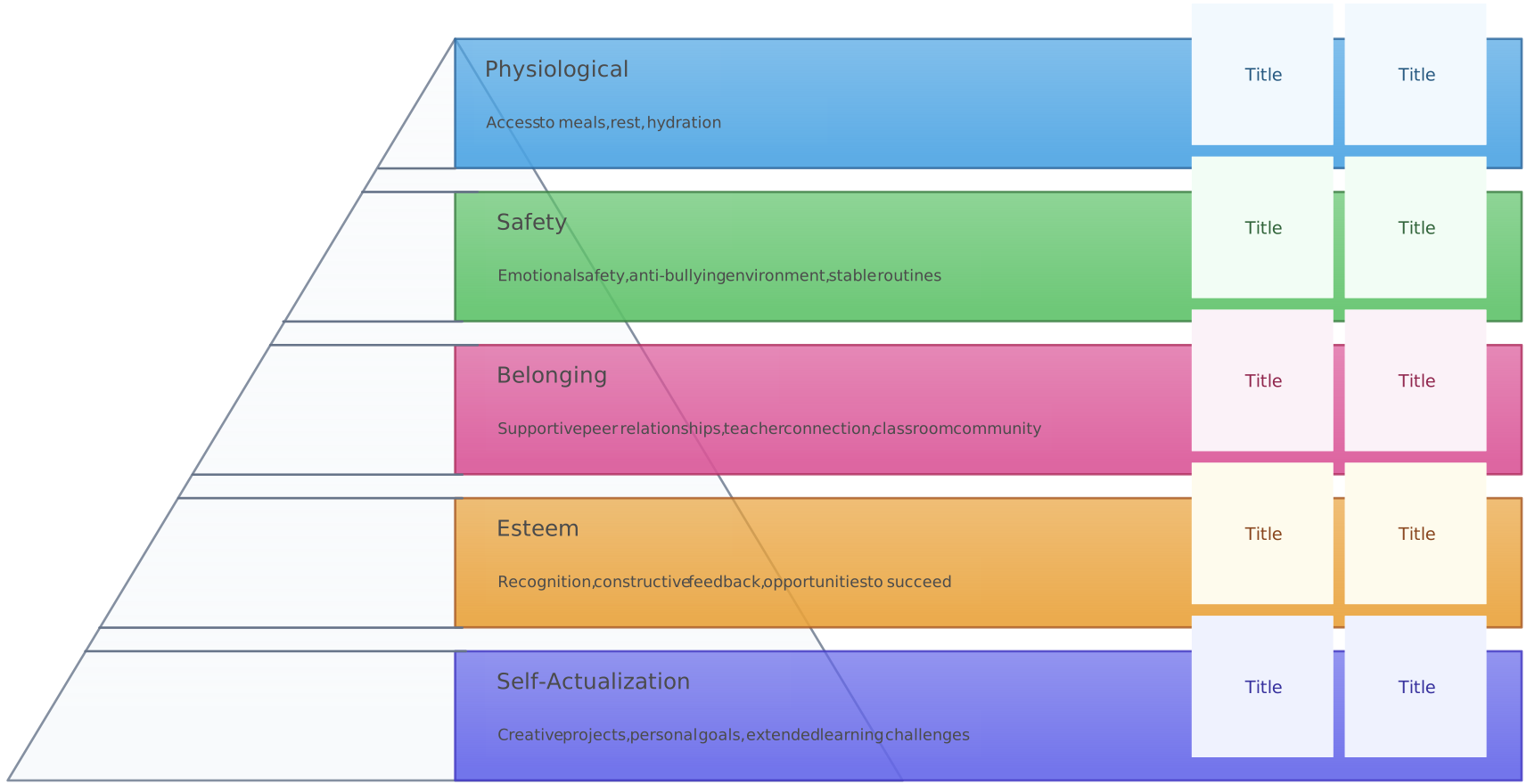
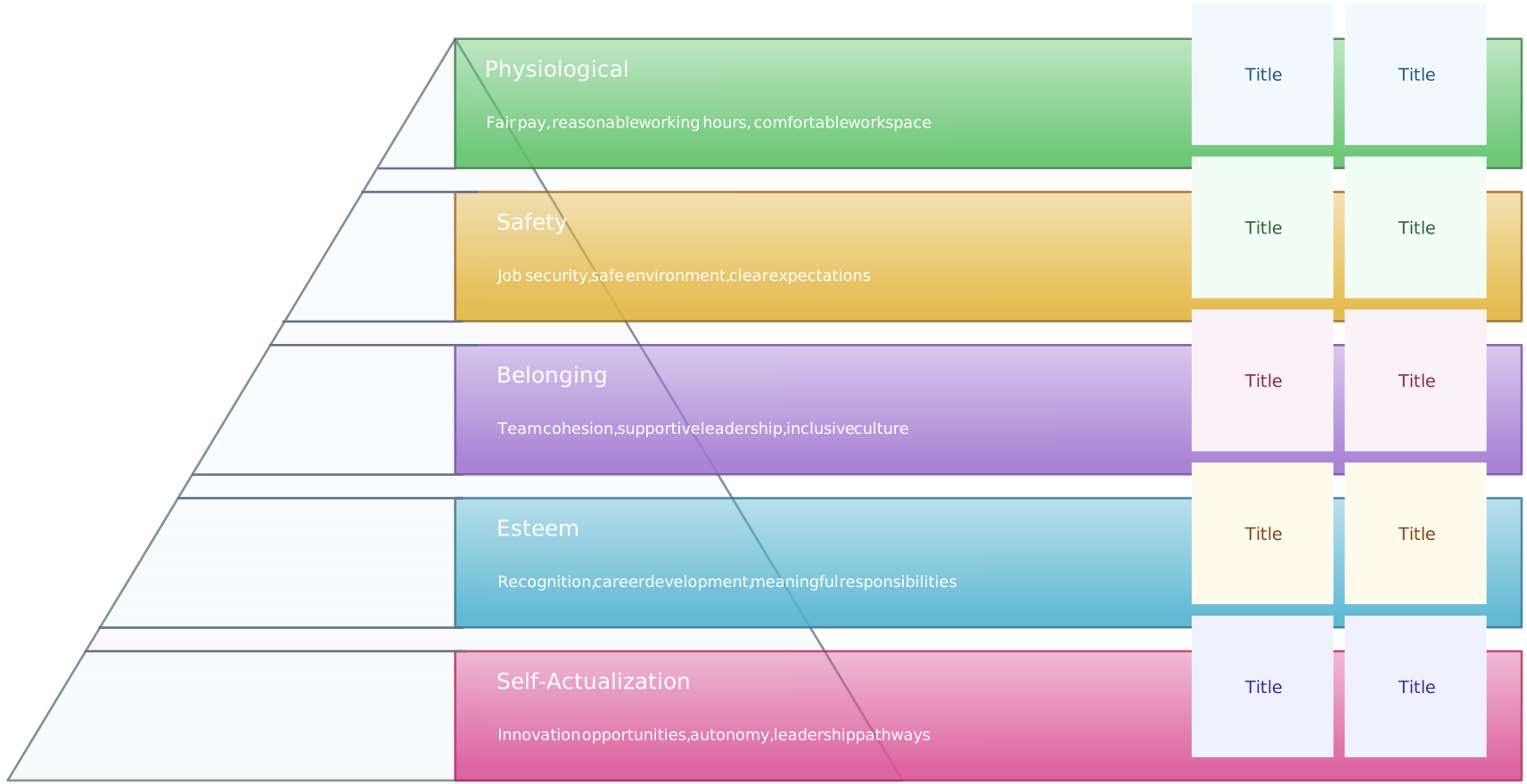
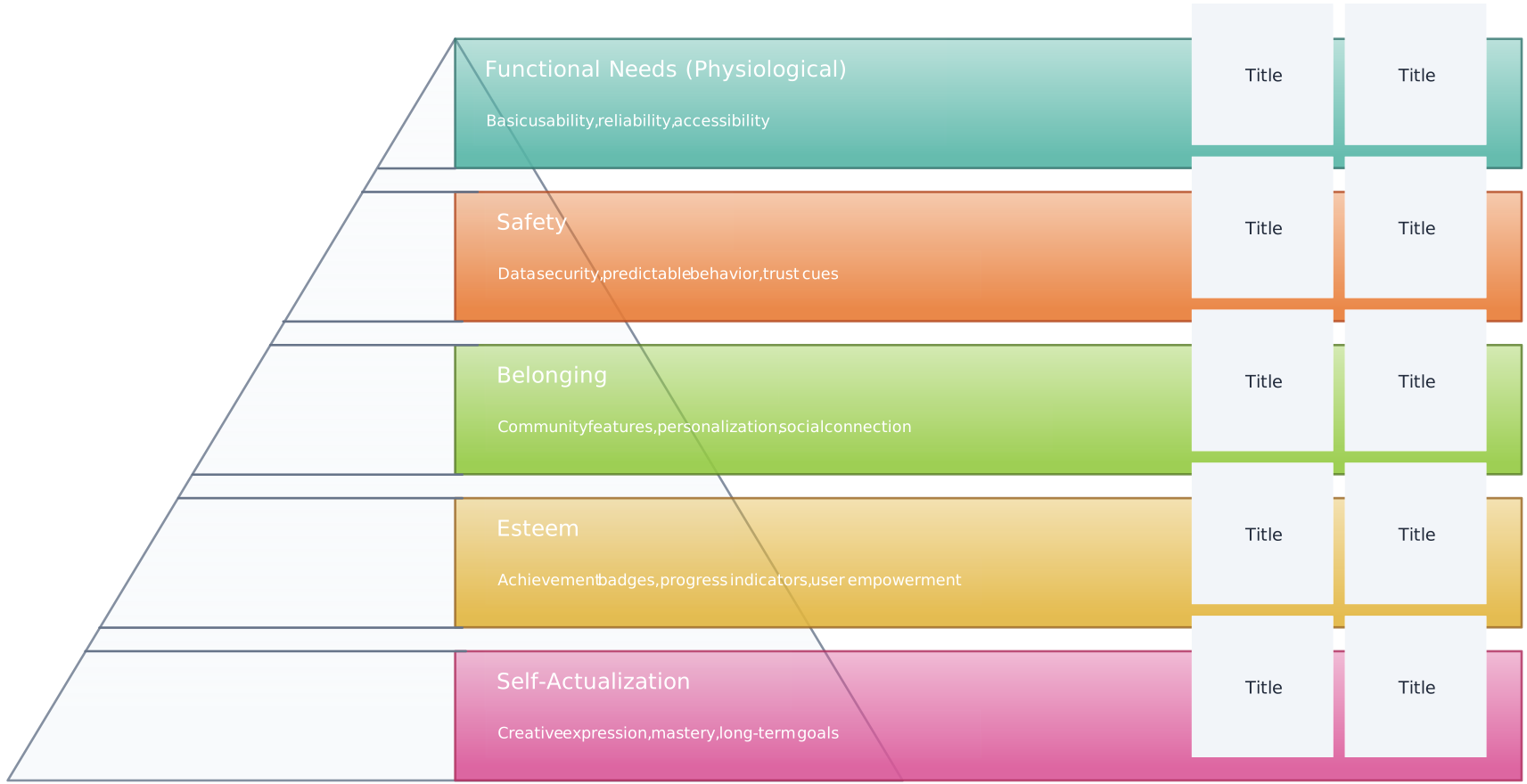
Align It to Your Purpose: If you’re using this hierarchy for the workplace, education, UX, or wellness, tweak examples and wording so they feel relevant and grounded in your scenario.
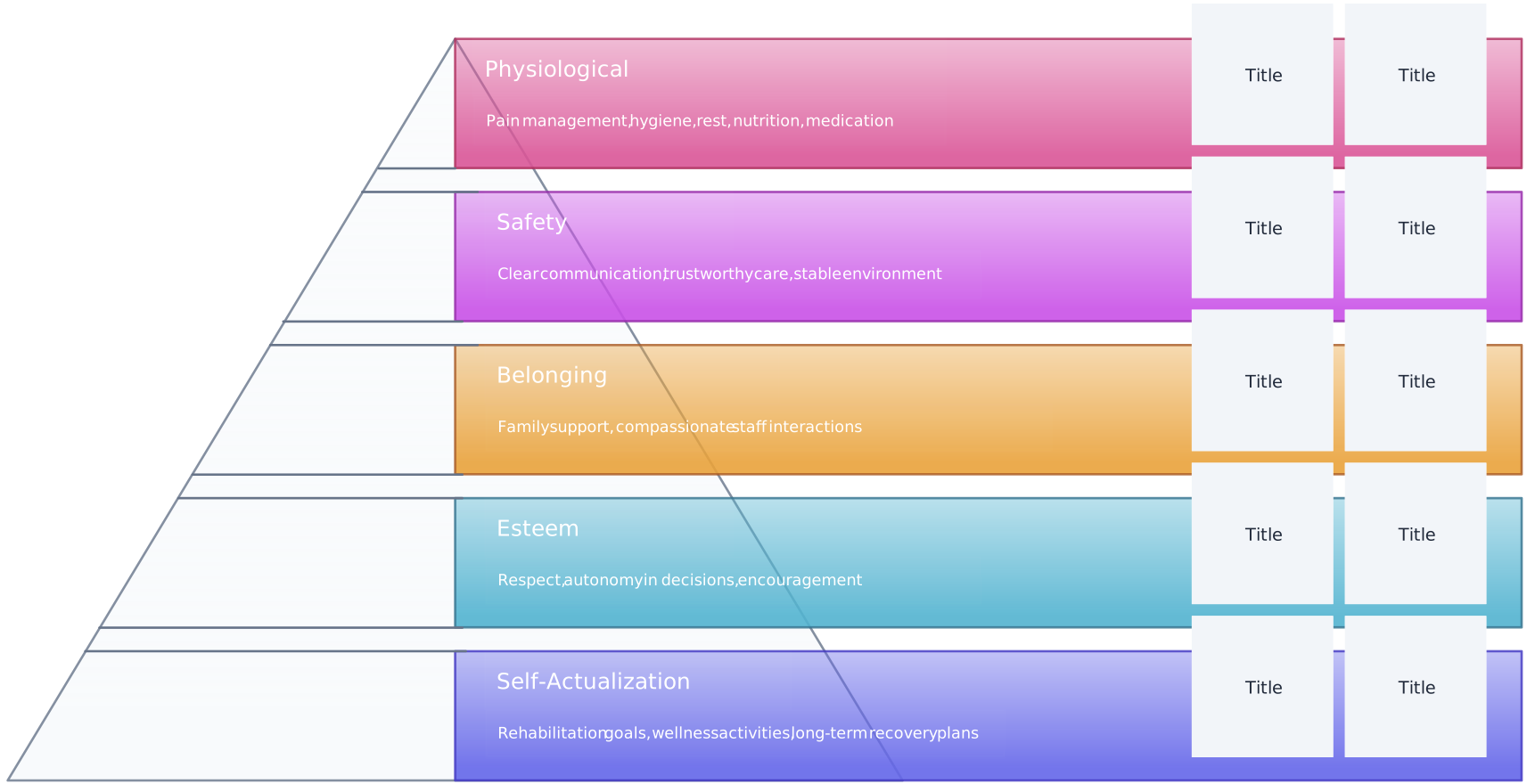
Free Maslow’s Hierarchy of Needs Examples


FAQs about Creating the Diagram of Maslow's Hierarchy of Needs
Why is the hierarchy often shown as a pyramid?
Do I need to use a pyramid shape for the diagram?
Can I customize the standard Maslow pyramid of needs for my field or project?
How do I compare two hierarchies?
How do I use the Maslow hierarchy of needs diagram effectively?
Resources
Lomas, J. C. “Climbing the Needs Pyramids.” SAGE Open, vol. 3, no. 3, 13 Aug. 2013, p. 215824401350028, https://doi.org/10.1177/2158244013500283.
Wu, Wenling. “The Relationship between Incentives to Learn and Maslow’s Hierarchy of Needs.” Physics Procedia, vol. 24, 2012, pp. 1335–1342, https://doi.org/10.1016/j.phpro.2012.02.199.